


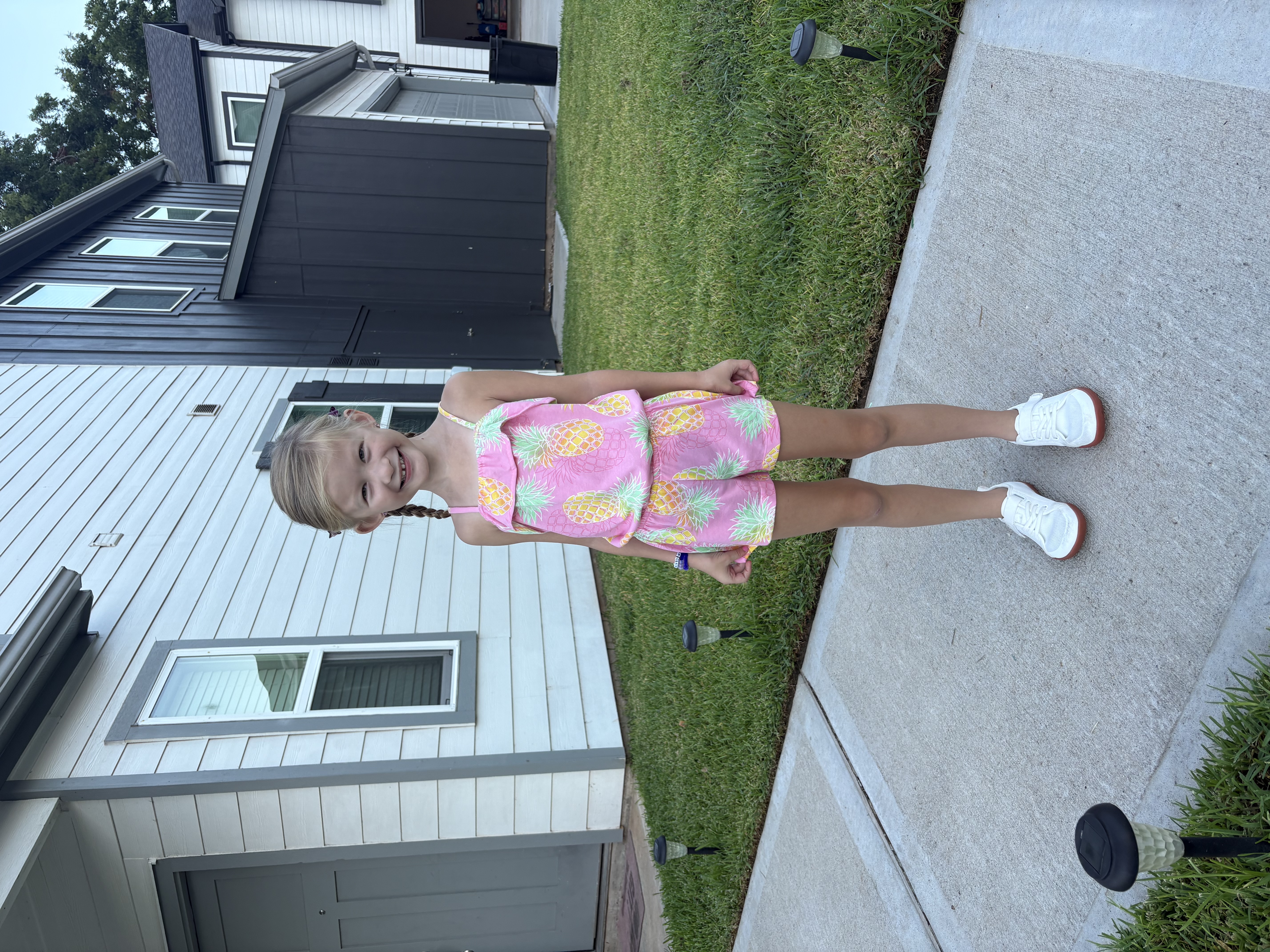
 Insights on Navigating Kindergarten from FOP Community Member Natalie Luna-Kuhn
In this post, we connect with FOP community member, Natalie Luna-Kuhn, mom to 5-year-old Leilani, to learn about how their family navigated the difficult decisions around starting the school experience with FOP and what steps they took to set Leilani and their family up for success.
Did Leila attend preschool or other activities outside the home before kindergarten?
Leila was homeschooled for pre-kindergarten, but did attend the library story time before going to kindergarten.
How and when did you begin planning for Leila to attend Kindergarten?
We decided three months before school started that we would try to put her in public school after meeting with the school and special education team, who assured us they could provide her with a team that could help keep her safe while allowing her to have the most normal childhood possible.
What steps did you take when contacting the school?
I first contacted the school principal to learn the next steps. The principal advised me to reach out to the district special education director to discuss Leila’s needs and special accommodations.
How did you decide between a 504 plan and an IEP?
We met with the principal and special education director to let them know what we needed and wanted. Following our discussion, they decided we only needed a 504 plan since Leila didn’t have any physical limitations (other than neck flexibility) or cognitive impairment interfering with her learning.
What materials or resources did you use to share about FOP with Leila's school, teachers, and classmates?
I shared the IFOPA website, links to the classroom talk examples, the “Same But Different” video, and age-specific tips for navigating school. I also passed out the cards given out at the FOP Family Gathering to explain what FOP is to her teachers (including physical education and the school nurse).
What plans and protocols are in place with the school to support Leila?
Leila was given a full-time aide to be by her side all day and make decisions regarding her safety. We inspected her classroom and helped the teacher make adjustments to help keep Leila comfortable. Leila sits in the back of the class to ensure she can clearly see the board without having to look up (as she cannot extend her neck backwards). When they do floor time, they understand it’s uncomfortable for her to sit criss-cross, so she sits in a way that’s most comfortable for her or she is given a chair. She is also at the back of the line in case there is a domino effect when kids are walking to/from classes. Her PE teacher has modified activities for her when her safety during an activity is in question. On the playground, the aide decides if it’s safe enough for her to play. On days the playground is full, she has activities such as bubbles, chalk, etc, for her to play with (this also allows other kids to join in on her fun without excluding her).
Natalie is happy to connect with parents who have additional questions. Our Family & Provider Support Coordinator, Melissa Davis, is also here to help your child’s team get connected with FOP experts and resources. Learn more about Melissa at ifopa.org/staff
