


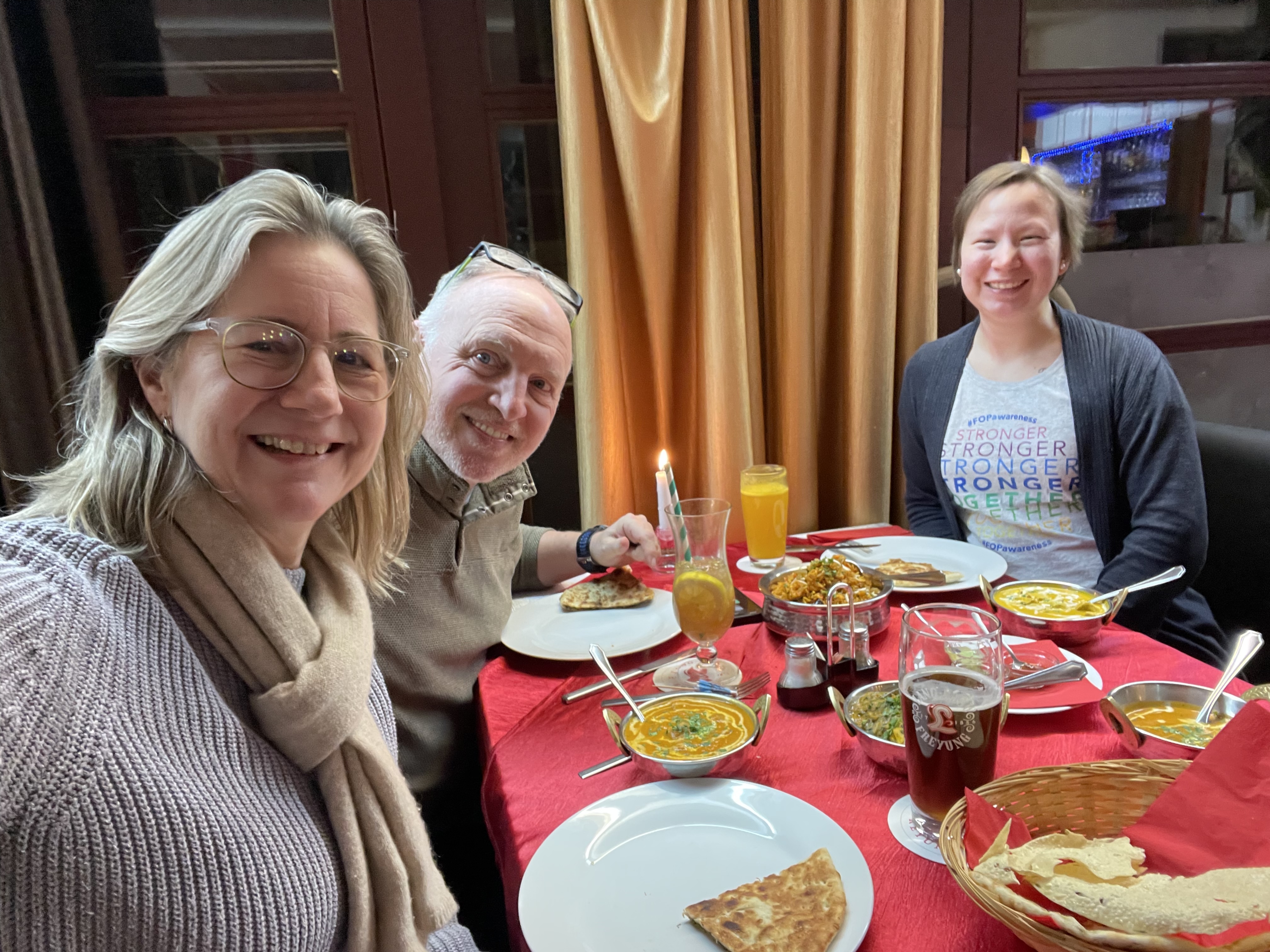
For the 2026 Global FOP Awareness Day, the IFOPA is marking the 20th anniversary of the FOP gene discovery with our special 12-part documentary series Journey to Discovery: A Breakthrough Built on Hope. We sat down with filmmaker Dana Garrett of Trailhead Films as she reflected on the storytelling process—what it took to bring the series to life with her partner Dave Butz, the people behind it, and the moments that shaped the final series.
Q: You’ve been connected to the FOP community for a while. How did this project deepen your perspective?
Dana Garrett (DG): What’s been most meaningful is getting to understand the community on a deeper level. When we were first introduced to FOP, like many people, we had never heard of it. Reading about it, it almost didn’t feel real—it’s that hard to comprehend.
Our first experience at Family Gathering in 2017 was incredibly powerful. We sat and listened as people shared their stories one after another. What stood out immediately was the resilience.
People are living with something incredibly difficult, and they don’t pretend it’s easy—but there’s a strength and acceptance that’s remarkable. What’s hardest isn’t always the present; it’s living with the uncertainty of what might come next.
And for parents, that emotional weight is often even heavier.
Q: What surprised you most as you explored the story behind the gene discovery?

DG: It’s more than one “story”—it’s stories. Before doing this series, we’d often reference the gene discovery and the collaboration behind it in a single sentence. This project allowed us to unpack how it all happened.
It didn’t just happen. It was built through determination, connection, and countless moments of people choosing to work together.
There were so many “chance encounters” that changed the course of things. A family going to a particular clinic. A researcher making a key connection at a conference. These small, seemingly random moments created a chain reaction.
At its core, this isn’t just a scientific story. It’s a human one about persistence, generosity, and people working toward something bigger than themselves.
Q: With so many stories involved, how did you approach shaping the narrative?
DG: I tend to let stories unfold rather than trying to force them into a rigid structure. We knew the key people and moments we needed, but we didn’t map everything out in advance.
As we went, the story revealed itself. It became clear which pieces belonged together and how they connected.
There’s always more you could include, but our goal was to give a true sense of the journey. And in many ways, it came together more naturally than I expected.
Q: How has it felt from the beginning of this project to now, having a completed documentary series?
DG: At the beginning, it felt overwhelming. We were working on an aggressive timeline and had such a big vision for what we wanted to accomplish. There were definitely moments where we wondered, can we actually do this?
But once we got into production, everything started to take shape. A lot of the foundational work had already been done, and we were able to build from there and really run with it.
Q: Were there any moments during filming that stayed with you?
DG: So many. The moments I love are the unscripted ones.
We filmed Dr. Rolf (Ollie) Morhart, a pediatrician in Germany, who had helped identify a family with FOP. While we were filming, he started playing with a child in a park—jumping alongside her on a small trampoline. That moment said more about who he is than any interview could.
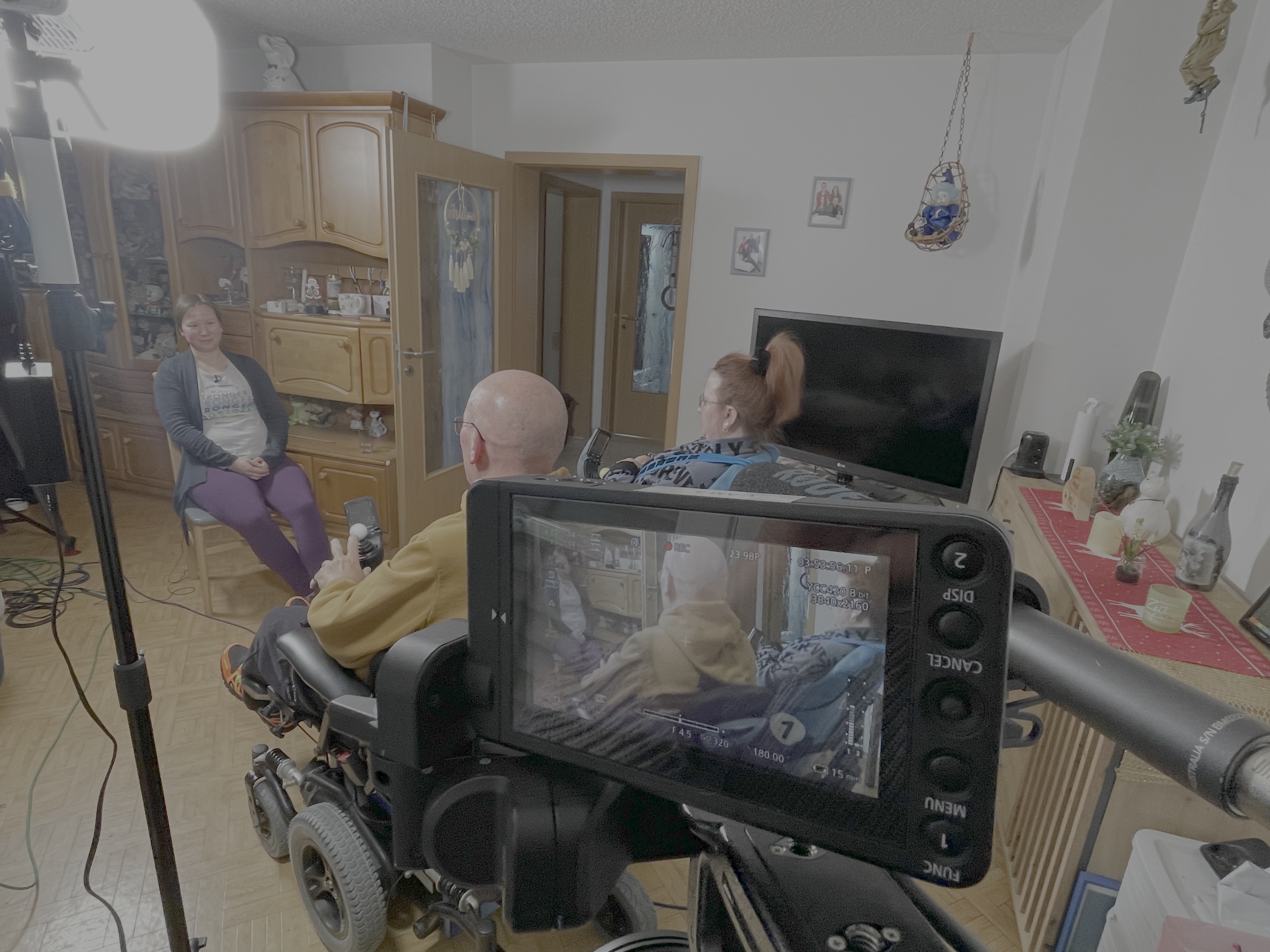
Another powerful moment was when Nadine, who is an FOP researcher and lives with FOP in Germany, met a brother and sister, Norbert and Christine, whose participation helped make current research and clinical trials possible. She was able to thank them directly. It was incredibly emotional—there was a real sense of the past meeting the present.
Those are the moments that stay with you.
Q: What do you hope the FOP community takes away from this series?
DG: I hope it gives people a fuller picture of how far things have come. Especially for newer families, it’s important to understand the support systems and research we see today didn’t always exist.
This story captures the legacy of the early families and researchers—the people who pushed forward despite uncertainty, often knowing the breakthroughs might not come in time for them personally.
Their contributions built the foundation for everything happening now.
Q: And for audiences outside the community?
DG: Awareness is key. There are still cases where FOP is misdiagnosed, and early understanding can make a real difference.
But beyond that, I think people will connect to the humanity of the story. It will change your perspective. You see what people are navigating every day, and it puts so much into focus.
It’s a story about resilience, but also about collaboration—what’s possible when people come together with a shared purpose.
Q: What is it like for you to personally be so immersed in this story?
DG: It’s been an honor, truly. Over time, these relationships have become very real. There is deep trust there.
We’ve been welcomed into people’s homes and lives, and that’s something we never take lightly. It’s shaped how we approach storytelling—always with care, flexibility, and respect for what families are experiencing.
Q: Now that the project is at its end, how does it feel?
DG: It’s one of the biggest projects we’ve ever taken on. There were definitely challenging moments along the way . . . like when our equipment was stuck in Heathrow Airport for three days or when Dave got Covid right before our trip to San Francisco! But seeing it come together has been incredibly rewarding.
I’m proud of what we’ve created for the series. And I hope people find something meaningful in it—whether that’s understanding, connection, or simply a deeper appreciation for the journey tothe gene discovery and all the progress built on this incredible milestone.
See more behind-the-scenes photos on Flickr.

Thank you, Dana and Dave!
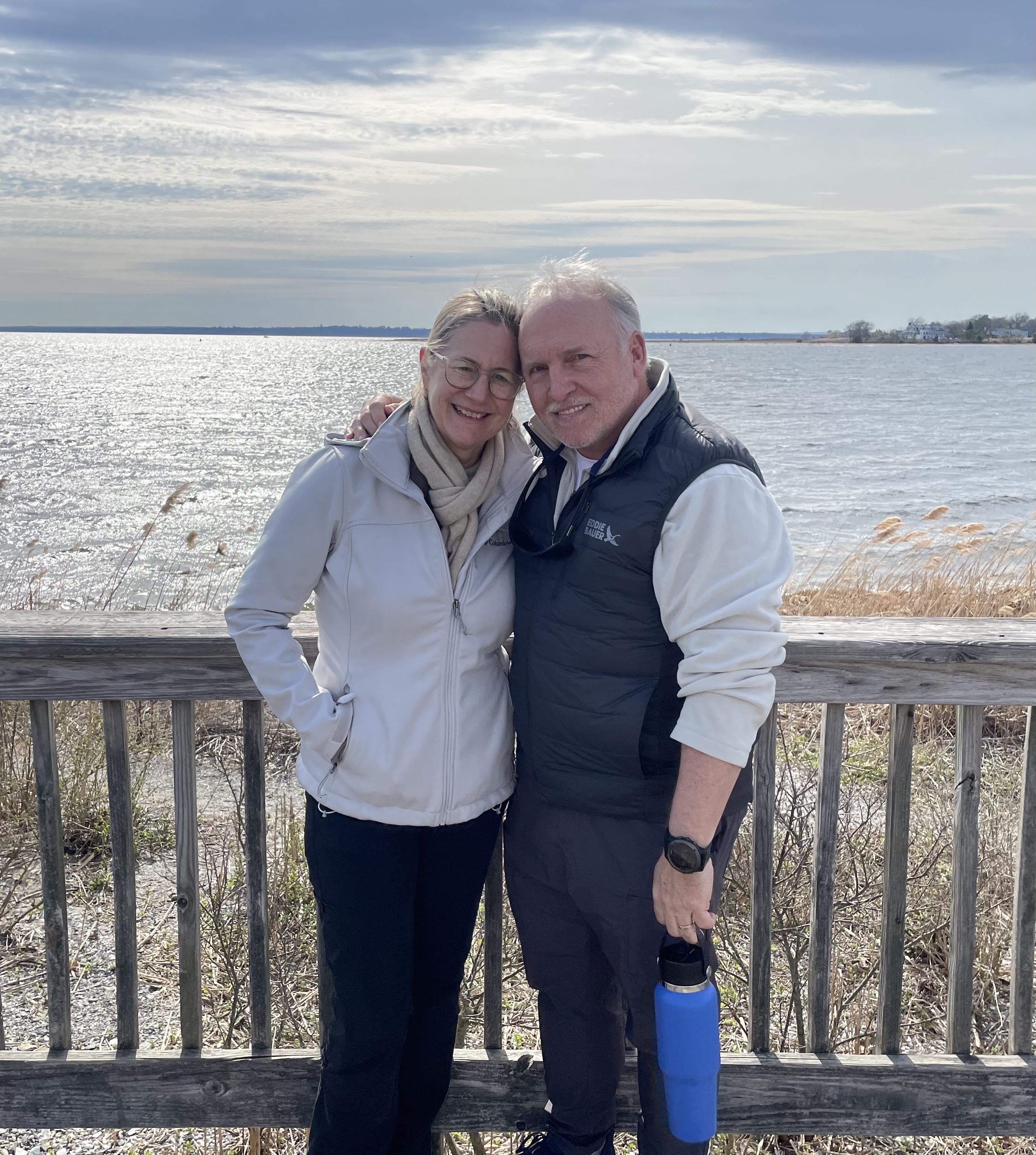
We’re incredibly grateful to Dana Garrett and Dave Butz at Trailhead Films for the heart and dedication they have poured into this documentary series. Above all, we’re grateful for their years-long partnership in sharing our FOP community’s stories with creativity, nuance, and joy.
This conversation has been edited for length and clarity.
