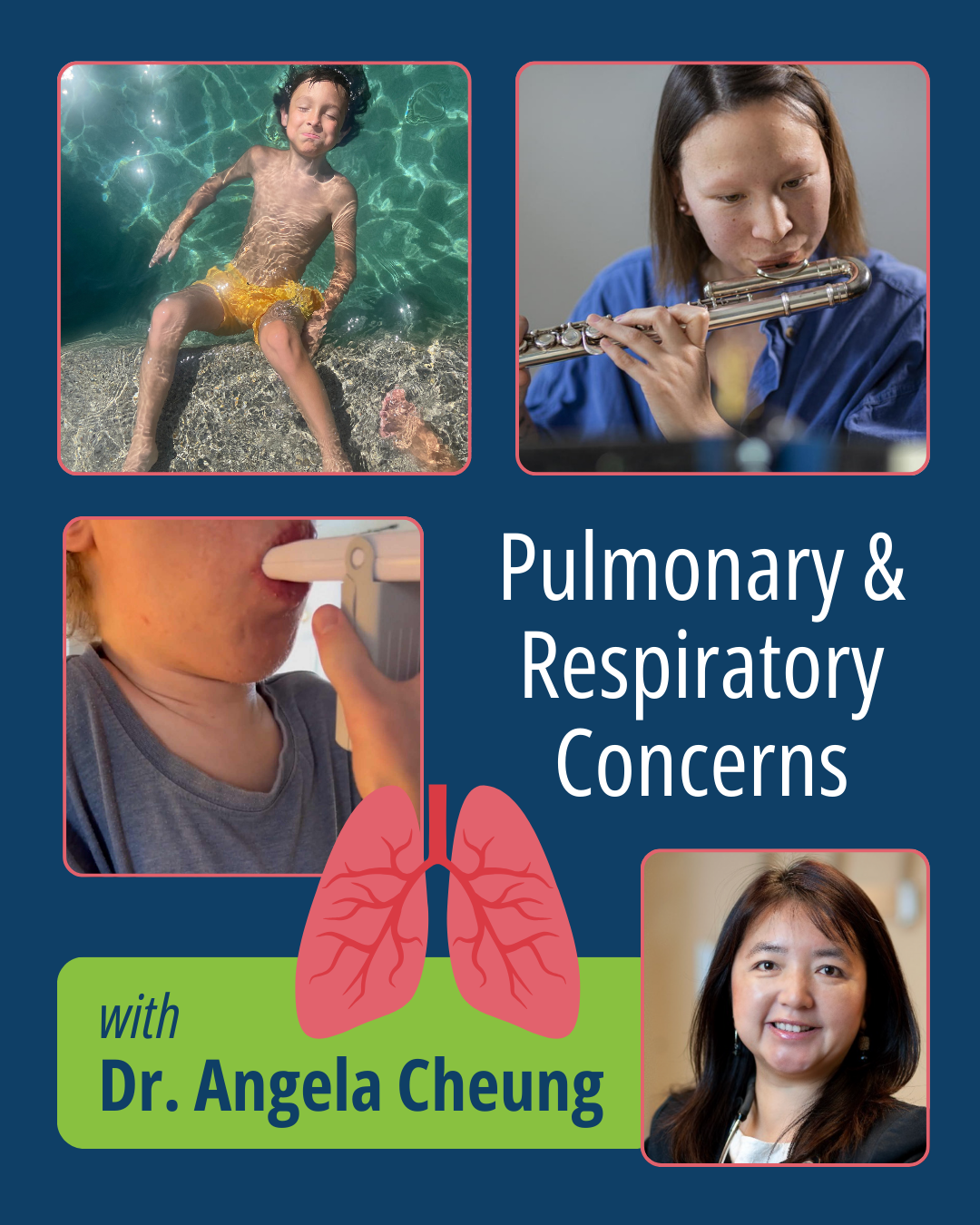
 An FOP Expert's Perspective
Angela Cheung, MD, PhD, FRCPC, University of Toronto, University Health Network, Canadian FOP Network, Member of the International Clinical Council on FOP
Lung problems can creep up on individuals with FOP in an insidious manner. As the disease advances, the abnormal bone growth can restrict and impair lung function and the ability to clear secretions. Many individuals with FOP die from pneumonia, right-heart failure, and thoracic insufficiency syndrome.
Lungs are a passive organ. When we breathe, two groups of muscles do most of the work.
- The diaphragms at the bottom of both lungs are big pieces of dome-shaped muscle. When they contract, they flatten and pull the lungs down.
- Intercostal muscles (the muscles in between your ribs) contract and lift the rib cage out and up.
It’s through the contraction of both of these muscle groups that our lungs are able to expand.
With FOP, there is a restriction of the lung cavity with the extra bone formation, even if we are not aware of any flare-ups in the chest or back. So it is important to train these muscles and do everything that we can to maintain lung function and prevent bad outcomes. While intercostal muscles can be affected by FOP, the diaphragms are relatively spared.
For adolescents and adults, breathing exercises with an incentive spirometer are helpful. Watch this teaching video created by Ed Hsiao, MD, PhD, on how to use an incentive spirometer. I often suggest my patients do this 10 times, twice a day, morning and evening (like brushing their teeth). The incentive spirometer can keep track of the volume that the person with FOP can inhale. The patient should note these measurements and show them to their doctor. Sometimes, individuals with FOP find this tool a bit stressful to use. If that is the case, encourage them to take slow, big, deep breaths and slowly exhale, about 6-10 seconds per breath cycle. Again, I recommend doing this 10 times in the morning and 10 times in the evening.
For young children, teaching them to blow soap bubbles, breathe in like smelling a flower, breathe out like blowing out a candle, and other techniques can be helpful. Here are some fun ways to teach breathing exercises to kids.
For both kids and adults, singing, swimming while holding your breath underwater, and talking can help with maintaining lung capacity. It’s also important to try to clear secretions and get them out. Here is a good video for teaching how to cough and expectorate.
In summary, maintaining good, healthy lungs is important for individuals with FOP.
Patient Experiences
Hugo uses a Peak Flow Meter every day to help keeps his lungs healthy.
His mom Marie says, "We use it every time he gets up from bed to help him get rid of mucus that can be stored when bedridden. We use it to do 'hard quick exhales' to learn to better get rid of mucus. It’s also great for stimulating circulation in the face muscles around the jaw."
Nadine plays the flute to help support her lung health.
"I've been playing the flute since age 7. Back then I didn't know all of this was also good to train my lungs. It's just way more fun than using the spirometer. In addition, I also started doing cardio workout and dancing."
Samson's mom Candace describes how he uses swimming as a safe activity to keep his lungs healthy.
“As parents, one of the scariest parts about having a child with FOP is the fact we have so little power over how it affects his body. Decreased lung function is one of the scariest negative side effects that we have worried about, as FOP bone can harden and restrict the chest and back. Fortunately, though, lung health is something that we can positively impact to try to make Samson’s health better for longer. Samson has loved water since he was an infant, and we knew that swimming is fantastic for breathing and overall lung health, so when we had the opportunity to put a pool in at our house, we went for it! Swimming has provided him the opportunity to exercise his lungs and improve his breathing without it feeling like a chore or another doctor’s appointment. To him, he’s just out there living his best life while in the water! To me, he’s thriving with his siblings and exercising those important respiratory muscles. Not only has swimming been a wonderful tool to strengthen Samson’s lungs, but it’s a low-impact activity that’s easy on his body, and has loaded his childhood with incredible core memories that will stay with him forever!”
The FOP Treatment Guidelines
You can learn more about this important topic and other aspects of FOP management by reviewing the ICC's FOP Treatment Guidelines. Respiratory Health in FOP is in Section 5: Special Medical Considerations in FOP (5-6).
Other Resources
You can access lung health information to share with your FOP patients and their families on the IFOPA website.